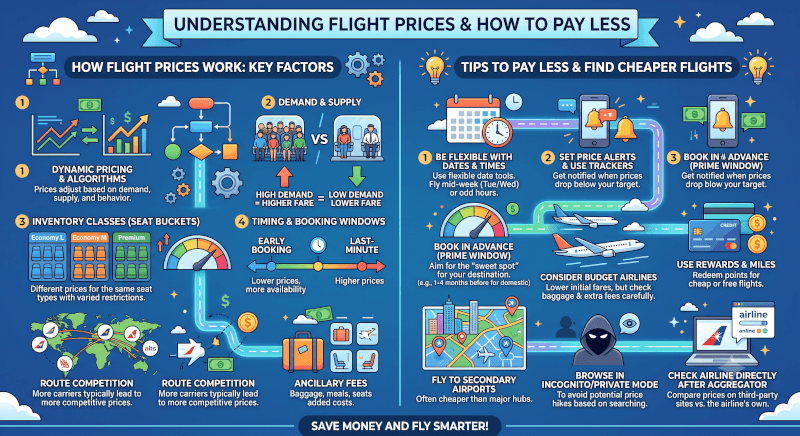

Of all the levers on the price of a trip, when you go moves more than anything you can do at the booking stage. The best value usually sits in the shoulder: the weeks just before or just after a destination's peak.
Why fares fall there
Airlines price to demand, per departure. Once school holidays end or the summer rush fades, seats stop selling at peak pace, the forecast is revised, and the cheap fare classes stay open longer instead of draining in a week. The aircraft, the crew and the route have not changed. The queue for the seats has.
Hotels do the same thing on the same calendar, which is why a shoulder trip tends to be cheaper twice.
Rough windows to start from
In Europe, late April to May and September into October: mild, open, and far quieter than August. In Southeast Asia, the edges of the dry season, avoiding both the worst heat and the monsoon. For beach destinations, the fortnight either side of the main summer, while the sea is still warm and the families have gone home.
Treat those as a first guess and check the destination's own calendar. Local holidays, festivals and school terms redraw the peak, and a city with a big annual event has a second peak that no general rule predicts.
Getting the season and the fare
Picking the right weeks gets you most of the way. Inside those weeks the price still moves, so it is worth watching rather than booking the first sensible-looking option. Set a range of dates rather than a single day, keep a midweek departure in play, and let the dip come to you.