Low-cost carriers are built around one number: a headline fare low enough to be interesting. Whether that number survives contact with your trip depends on how much of what a normal ticket includes you need to add back.
The unbundled model, stated plainly
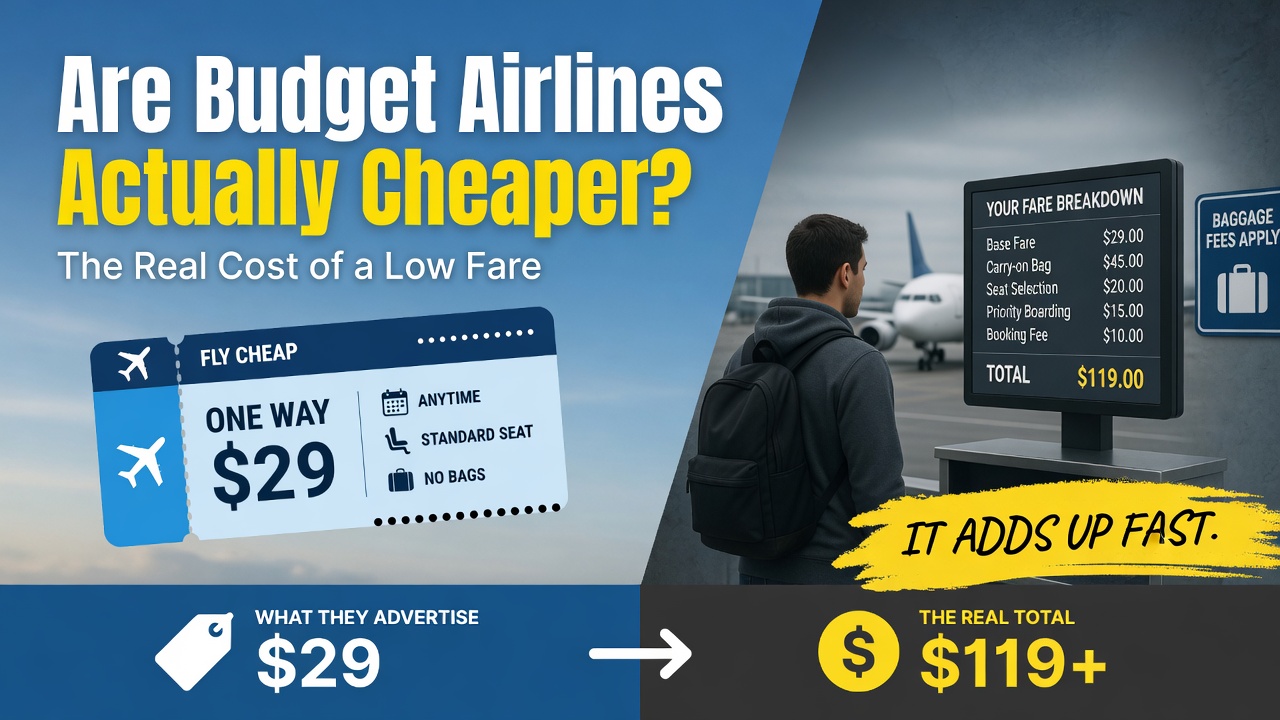
A budget fare buys a seat on the aircraft. Bags, seat selection, boarding order, food, sometimes check-in itself, and often the overhead-locker bag are separate products. This is not a trick; it is a business model that works because a large share of passengers genuinely want only the seat, and because the ones who want more can be charged for it individually.
The consequence is that two passengers on the same low-cost flight can pay very different totals, and only one of them is getting the advertised deal.
Compare totals, and include the ground
Before booking, add up the fare, the bag you will actually take, a seat if you need to sit with someone, any card or payment fee, and the transport to and from the airport they use. Low-cost carriers often fly to secondary airports, which can be excellent value or can add an hour and a train fare in each direction.
Then compare that number with the full-service fare, which frequently already includes a checked bag and a seat. Sometimes the budget option still wins comfortably. On a family trip with luggage, it often does not.
Where they are genuinely hard to beat
Short trips taken with a cabin bag. Routes they dominate, where nobody else has a reason to discount. And off-peak departures the big carriers price high because their business passengers will pay it anyway.
Where the model works against you
Tight itineraries, because a cancelled low-cost flight often means waiting for the same airline's next one rather than being rebooked onto a competitor. Group travel that needs assigned seats. And anything where a checked bag is not optional.
Let the fare decide, not the logo
The practical approach is to stop shopping by airline and watch the route instead. Set the total you would pay, and whichever carrier reaches it first, budget or full service, is the one you hear about.