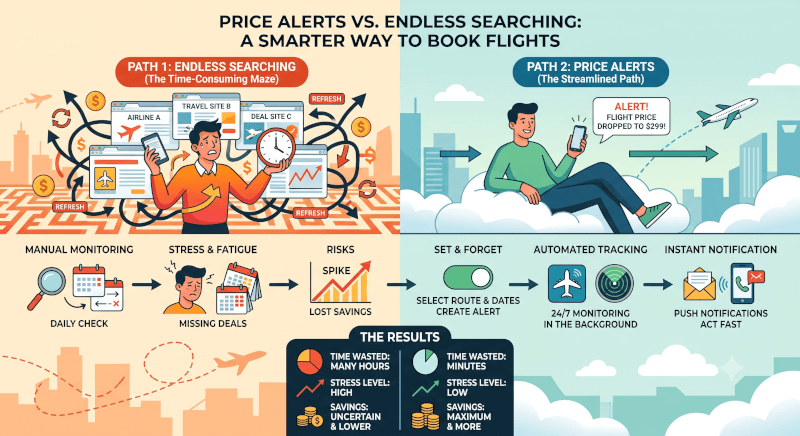
Most people shop for flights by opening three search sites, comparing, closing the tabs, and repeating it tomorrow. It feels like work because it is work. It also samples the price about as often as glancing out of the window samples the weather.
What a search can and cannot tell you
A search returns the fares on offer at that moment. It does not say whether that number is high or low for the route, and it cannot say what happened at three in the morning. Cheap fare classes open and drain on their own schedule; a short sale can be over before you next think about the trip.
Manual watching also does not scale. One route is tedious. Five is a hobby. And the routes worth watching are usually the ones you are least sure about, which is exactly when you check least consistently.
What an alert changes
An alert inverts the effort. You state a price once, and software does the sampling. The interesting property is not that it is automatic, it is that the decision has already been made: you decided in advance what you would pay, so when the message arrives there is nothing left to think about.
That also means an alert only earns its place if it stays quiet. "A fare exists on this route" is noise. "A ticket is now at or below your number" is a decision you already made, delivered.
What separates a good alert from a bad one
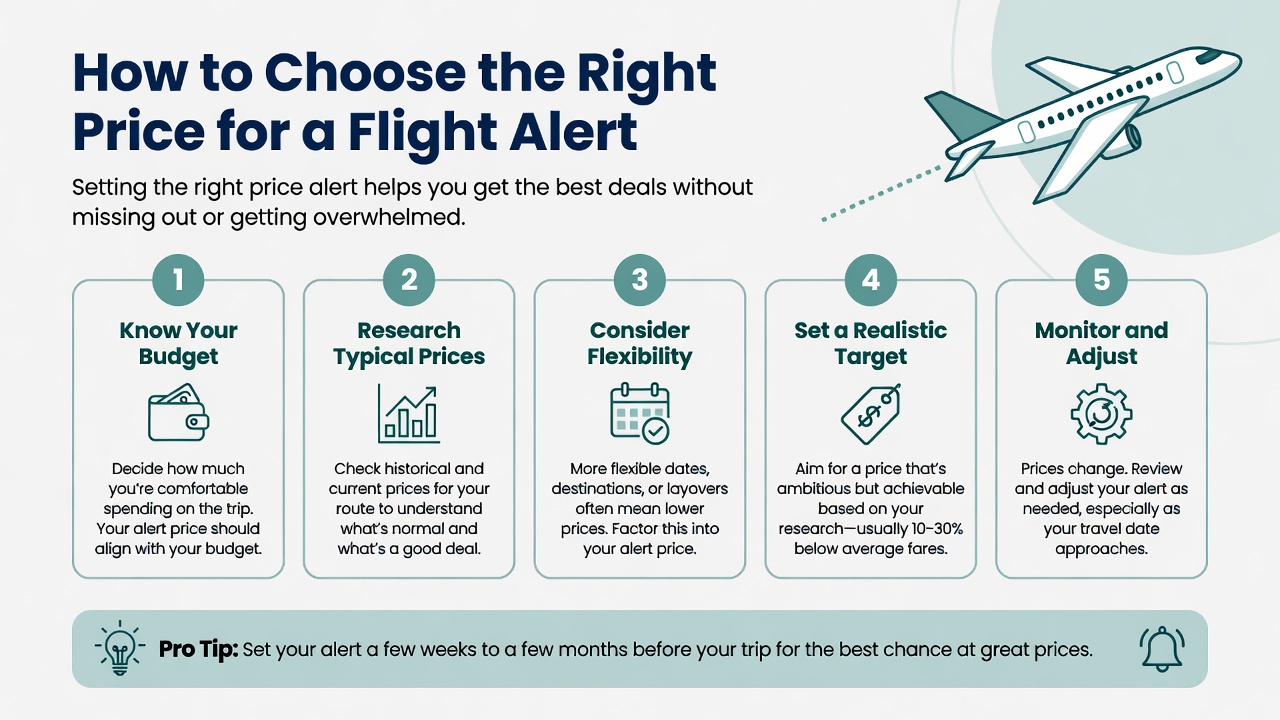
Your own price, not somebody's idea of a deal. A percentage off an average tells you about the average, not about your budget.
Enough shape to describe the actual trip: one way or return, priced as one ticket rather than two halves, nonstop only if a connection is out of the question, no dates if the dates are genuinely open.
And speed, because the fare that made the alert worth setting is the same fare that disappears.
How ours works
DiveFare re-reads fares on watched routes every 15 minutes, and a matching ticket goes out within about three. One message per route per day at most, with up to six options in it, one per departure date, so you get real choices instead of the same day repeated. A date you already heard about only comes back if it drops another 15%.
You can set the first one here. It takes about a minute and needs no account.