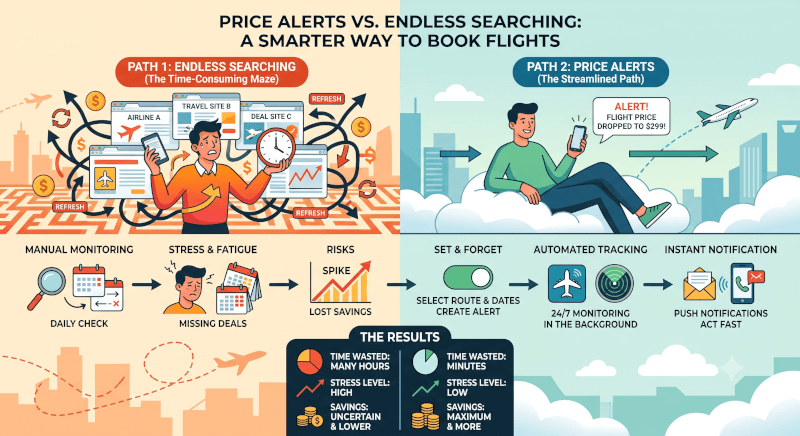

An alert is only as good as the number you give it. The number has to be low enough that a message means something and high enough that a message ever arrives.
Anchor on the route, not on your hopes
The usual mistake is starting from the fare you wish existed. Start instead from what the route actually costs. Our route pages show the cheapest option for each of the next three months and a day-by-day trend, which is enough to see the normal range in about ten seconds.
When you open the alert form, the price field is already filled with 20% under the cheapest fare currently visible on that route. That is deliberately a real target rather than a round number: far enough below today's price that hitting it is a genuine saving, close enough that it can plausibly happen.
Adjust for how badly you need the trip
If the dates are fixed and you are flying regardless, move the number up. A modest saving you actually book beats a large one you hold out for and miss. If the trip is an idea rather than a plan, move it down and wait; you are fishing for the exceptional fare, and you can afford to.
One way and return are different questions
Return fares are priced as their own product, not as two one-ways added together, and the sum of two cheap one-way flights is often a number nobody can pay because they never share a booking. If you want a return trip, set the alert on the return fare and let your limit meet the whole thing. With flexible dates you can skip the return date entirely and give a trip length instead, anything from 2 to 21 days.
Revisit it once
Prices drift with the season. A target that was aggressive in November can be unreachable near a holiday. If an alert has been silent for weeks and your departure is getting closer, raise it a little; everything is editable from My alerts without logging in.